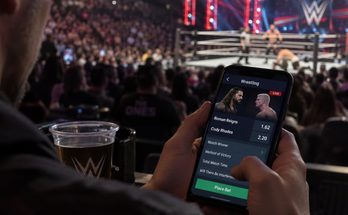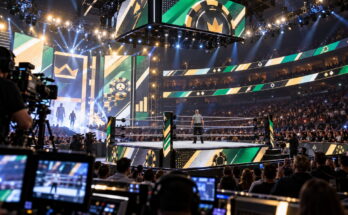

When professional wrestling enters the online gambling sector, the most important agreements are usually about intellectual property rather than game design. A ring name, catchphrase, likeness or piece of archived footage may be controlled by different parties. Who controls what depends on contracts, trademark registrations, copyright and the law of the relevant jurisdiction.
That makes wrestling a useful case study in brand licensing. A performer can be closely identified with a character without necessarily controlling every commercial use of it, while a promotion may own some rights but still need separate permissions for others.
Image rights are not a single legal asset
“Image rights” is often used as shorthand, but it can cover several distinct forms of protection. A ring name or slogan may be registered as a trademark. Broadcast footage, photographs and graphics can be protected by copyright. A performer may also retain rights connected to their name, likeness or personality, depending on the jurisdiction and the terms of their contract.
The division is therefore contractual as much as legal. Agreements can determine who may license a character, for which products, in which territories and for how long. Because most talent contracts are not public, broad claims that a promotion simply “owns” a wrestler’s identity are rarely precise enough.
This distinction becomes particularly important when intellectual property moves into regulated products such as online slots. The licensing question is not simply whether a familiar name can appear in a product, but who has authority to approve that use and what restrictions apply to its distribution and marketing.
The Rock agreement shows how rights can move in both directions
A useful public example came in January 2024. TKO Group Holdings disclosed that WWE had assigned “The Rock” trademark, along with certain related trademarks, service marks, ring names, taglines and other intellectual-property assets, to an affiliate of Dwayne Johnson.
The same transaction also shows why ownership alone does not tell the whole story. Johnson licensed the assigned IP, his name, likeness and certain additional rights back to WWE for use in specified categories of licensed products for up to ten years.
The arrangement illustrates a more complicated model than either “the wrestler owns the character” or “the promotion owns everything”. Rights can be transferred, licensed to another party and divided by product category, territory and duration.
Corporate licensing deals define the permitted use
Wrestling-related gambling content can also be licensed at company level. In July 2024, WWE entered into a three-year agreement with an international casino game supplier to develop three licensed titles for markets outside the United States. The first title followed in August of that year.
The US market has followed a separate route. In July 2025, WWE announced an exclusive multi-year agreement with a US betting and gaming operator to produce and distribute WWE-themed online casino games in regulated states. In March 2026, a further title from a third-party studio launched exclusively on that operator’s platform under the same arrangement.
These examples are more useful as licensing case studies than as game reviews. They show how a rights holder can authorise other companies to use protected marks and entertainment IP while restricting distribution to particular markets, partners and territories.
Brand governance continues after the licence is signed
Obtaining intellectual-property rights does not mean that a licensed product can be marketed in the same way everywhere. Gambling regulation adds another layer to the agreement.
In Great Britain, for example, gambling marketing must comply with rules restricting material likely to have strong appeal to people under 18. CAP Code rule 16.3.12 specifically addresses the use of people or characters whose example may be followed by, or strongly appeal to, under-18s.
That makes audience governance especially important when entertainment IP is recognised beyond an adult gambling audience. Licensing contracts may establish who can use an image or trademark, but advertising rules determine whether and how that licensed material can be promoted in a particular jurisdiction.
The two questions should not be confused. Intellectual-property permission answers whether a company has the right to use an asset. Gambling regulation can still restrict the context in which that use is communicated to consumers.
Licensing is ultimately about control
Wrestling-related gambling agreements illustrate how entertainment brands are managed once they move beyond television, live events and merchandise. Rights may sit with a promotion, a performer or another corporate entity, and contracts can move them between those parties in detail.
The two-track structure of the WWE deals makes this point clearly. The same brand can be licensed to one supplier for international markets and to a separate operator for the United States, with each agreement setting its own territorial and commercial limits.
That makes these agreements a story about intellectual-property governance rather than celebrity endorsement. Recognition may give an entertainment property commercial value, but it does not remove the legal distinctions between trademark ownership, copyright, likeness rights and permission to market a regulated product.
Gambling involves financial risk and is intended for adults aged 18 and over. In Great Britain, confidential support is available through the National Gambling Helpline on 0808 8020 133 (0808 2819 265 in Wales), while online self-exclusion is available through GamStop.

WA on Facebook - https://www.facebook.com/wrestlingattitude/
WA on Facebook (Women's Wrestling) - https://www.facebook.com/WrestlingDivas/
WA on X/Twitter - https://x.com/wa_wrestling
WA on Instagram (Women's Wrestling) - https://www.instagram.com/wa_wrestlingattitude/
WA on Google News - https://news.google.com/publications/CAAqBwgKMJf3owsw2oG8Aw
WA on Bluesky - https://bsky.app/profile/wrestlingattitude.bsky.social