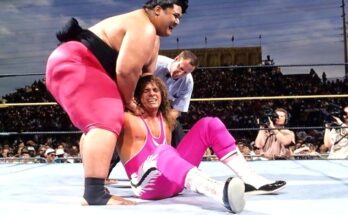
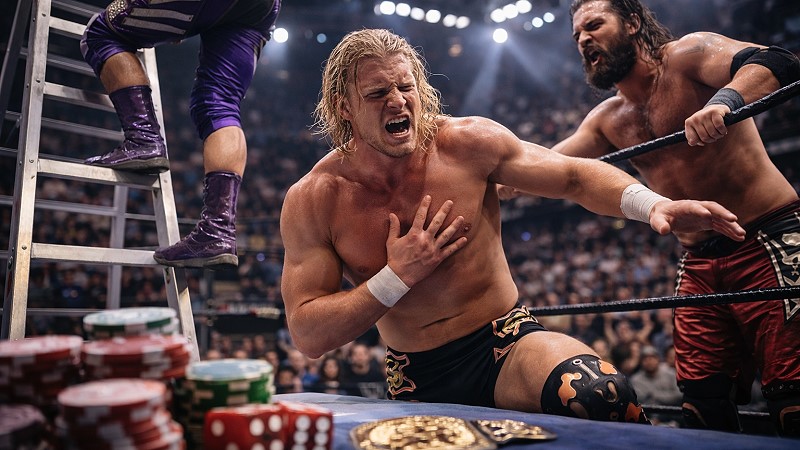
Professional wrestling has always existed at the intersection of sport and storytelling. Unlike traditional athletic competitions, wrestling relies heavily on narrative structure, character arcs, and emotional investment. Yet despite its scripted nature, wrestling continues to attract audiences drawn to themes of risk, unpredictability, and high-stakes moments.
Over time, these themes have shaped not only how wrestling is presented, but also how fans engage with the product beyond the ring.
The Role of Risk in Wrestling Storytelling
Risk is a foundational element of wrestling narratives. From ladder matches to steel cage encounters, performers are consistently placed in situations that simulate danger, uncertainty, and consequence. While outcomes are predetermined, the perception of risk remains central to audience engagement.
Promotions use this dynamic to:
- Elevate championship storylines
- Establish character credibility
- Create emotional tension during major events
Fans respond not just to the athletic performance, but to the illusion that something unpredictable could happen at any moment.
Fan Psychology and Engagement Patterns
Wrestling audiences are uniquely invested. Unlike many sports fans, wrestling supporters often follow storylines across weekly shows, pay-per-view events, and online platforms. This long-form engagement encourages deeper emotional attachment.
During breaks between major story beats, fans frequently turn to complementary forms of entertainment. This includes:
- Consuming backstage news and rumors
- Engaging in online discussions and predictions
- Exploring other low-commitment entertainment options
In media analysis, this behavior is sometimes compared to digital environments built around accessibility and quick interaction, including platforms described as a 10 euro deposit casino. The comparison is contextual rather than promotional, highlighting how minimal entry thresholds can influence engagement behavior across different forms of entertainment.
Wrestling as Controlled Chaos
One of wrestling’s enduring strengths is its ability to present chaos within a controlled framework. Matches appear unpredictable, yet adhere to carefully structured pacing and storytelling rules.
This balance mirrors broader entertainment trends where audiences seek excitement without complete loss of control. Wrestling delivers intensity while maintaining familiarity — a key reason why fans return week after week.
Digital Media and the Modern Wrestling Fan
The rise of digital platforms has significantly changed how wrestling content is consumed. Fans no longer rely solely on televised broadcasts. Instead, they engage through:
- Live commentary during shows
- Recap articles and match breakdowns
- Social media reactions and post-event analysis
Websites like Wrestling Attitude play a crucial role in this ecosystem by contextualizing events, explaining storyline developments, and tracking long-term narrative progression.
This layered consumption reinforces wrestling’s appeal as an ongoing narrative rather than isolated events.
Risk, Reward, and Audience Expectation
Wrestling teaches its audience how to read risk. Fans learn to recognize when a storyline is building toward a major payoff and when a match serves as narrative setup rather than resolution.
This awareness influences how audiences interact with other forms of entertainment. Wrestling fans often value:
- Clear structure
- Predictable escalation
- Meaningful consequences
Even when outcomes surprise, they feel earned within the established framework.
Why Wrestling Narratives Remain Relevant
Despite changes in media consumption and entertainment habits, wrestling’s core appeal remains intact. Its stories continue to resonate because they reflect familiar human themes: ambition, betrayal, resilience, and redemption.
By framing risk as part of a larger narrative journey, wrestling allows fans to experience uncertainty without real-world stakes — a balance that keeps the genre culturally relevant.
Conclusion
Professional wrestling occupies a unique space in sports entertainment, blending physical performance with narrative-driven risk. Fans engage not only with matches, but with the emotional and psychological frameworks that surround them.
As digital platforms expand how wrestling is discussed and consumed, the fundamental appeal remains unchanged: structured chaos, compelling characters, and the promise that every risk serves a purpose within the story.

WA on Facebook - https://www.facebook.com/wrestlingattitude/
WA on Facebook (Women's Wrestling) - https://www.facebook.com/WrestlingDivas/
WA on X/Twitter - https://x.com/wa_wrestling
WA on Instagram (Women's Wrestling) - https://www.instagram.com/wa_wrestlingattitude/
WA on Google News - https://news.google.com/publications/CAAqBwgKMJf3owsw2oG8Aw
WA on Bluesky - https://bsky.app/profile/wrestlingattitude.bsky.social