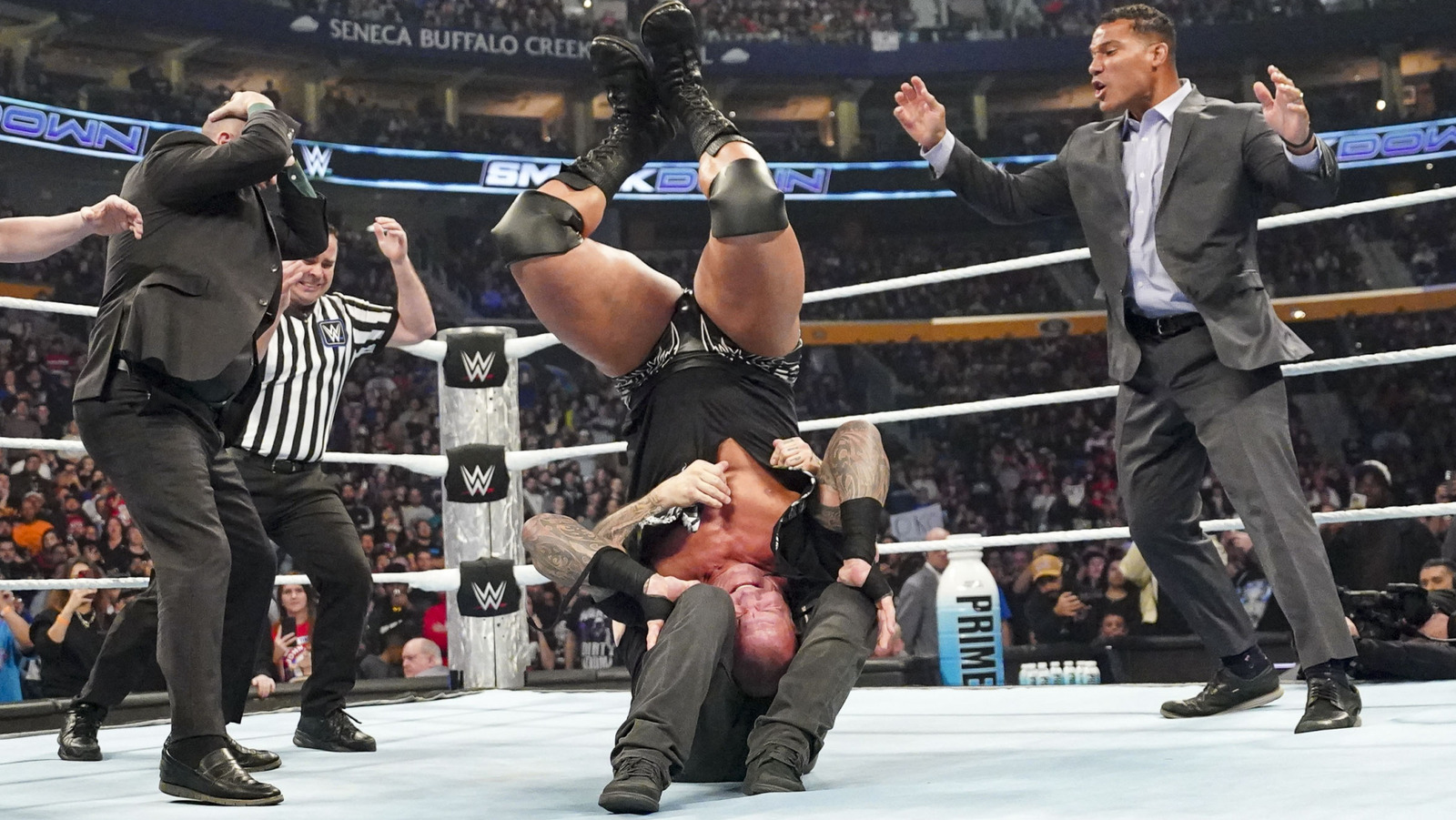
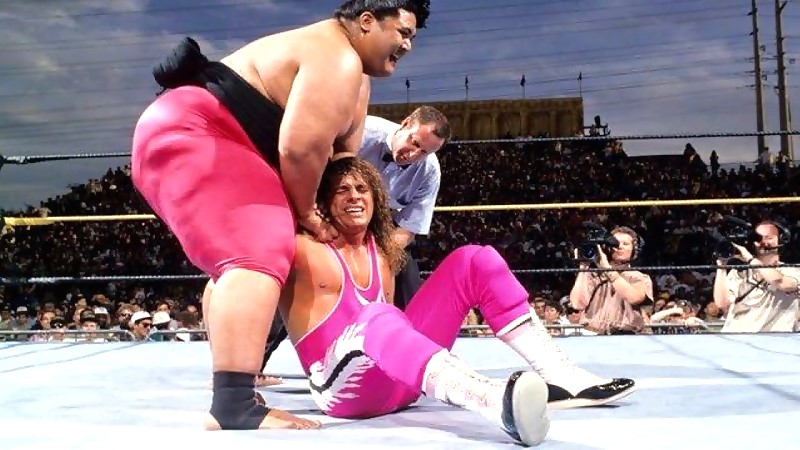
WWE stands for World Wrestling Entertainment, the world’s largest wrestling promotion, founded in 1953 as Capitol Wrestling Corporation.
Art can manifest itself in many different forms. It can be a painting on canvas or a brilliant poem, and without a doubt, it can also be sport! From football to gymnastics and boxing. All of these sports combine physical strength, intelligence and skill, which in general makes them a true art in every sense of the word…
In this introductory work, I will tell the story of the foundation of wrestling at the peak of sports entertainment! Who is Vince McMahon, what does the undertaker have to do with it, and who is the most invisible wrestler in WWE history? Along the way, I will insert my thoughts and reflections, impressions and romanticism, as I love to do.
Wrestling began to evolve into WWE sports entertainment in the 19th century. At that time, theatre and circus shows featuring wrestlers became popular in Europe and the United States. Initially, these performances were based on French and English wrestling. However, over time, the emphasis shifted from pure sport to spectacular and scripted elements.
In 1953, the Capitol Wrestling Corporation was founded. It was the first organisation to turn wrestling into a real show for spectators. They came up with exciting stories and colourful characters to make the fights more interesting for people to watch. This company became the foundation for the future WWE.
Sport and gambling have always gone hand in hand – Online sport betting odds
In the 1970s and 1980s, wrestling finally became ‘sports entertainment’: the Raw and SmackDown brands appeared, which have been the two main brands of WWE since the concept of brand expansion was introduced in 2002, with storylines, large-scale tournaments and television shows where victories and defeats are scripted in advance.
The main villain of WWE
After a brief overview of the basics, we smoothly move on to the founders, to Vincent Jay McMahon, who owned the Capitol Wrestling Corporation, which later blossomed into the well-known WWE, but now headed by McMahon Jr., yes, yes, yes, the same meme-worthy and villainously charismatic Vince McMahon who faints or gets his head shaved by the President of the United States.
Vince began his wrestling career as a commentator for his father’s company, and in 1982 he acquired the business and turned it into the global WWE brand, monopolising the wrestling industry. He is a highly controversial figure, and there are many unpleasant situations for which he is directly responsible. There have been numerous scandals, including allegations of sexual harassment and abuse of power. But, I swear by the WrestleMania championship belt, he is simply an irresistibly charismatic bastard.
All businessmen are, by nature, boring old men who do boring things. But when Mr. Vince decided that at the age of 40 it was time to start the Big Boss arc, come up with a bunch of crazy storylines and become the main villain of the show!
It was his charisma, audacity and unconventional approach that made WWE the show that cannot be ignored. In addition, he also raised descendants who are now involved in the business after him.
Professional wrestling shows are the most famous calling card of American entertainment. Such shows are organised by WWE, AEW, TNA Wrestling and ROH. These organisations hold touring events in the United States and abroad.
The matches at these shows are highly theatrical, and the dramatic storylines, including feuds between wrestlers, are carefully crafted and played out to attract viewers and promote the show.
WWE is built on a clear system of roles: the good guys are faces and the bad guys are heels. The good guys are our heroes, whom the audience supports, while the bad guys are antagonists who provoke hatred by breaking the rules, using tricks and demonstrating unsportsmanlike behaviour. The storylines (feuds) revolve around conflicts between them, often involving betrayal, revenge and dramatic twists.

WA on Facebook - https://www.facebook.com/wrestlingattitude/
WA on Facebook (Women's Wrestling) - https://www.facebook.com/WrestlingDivas/
WA on X/Twitter - https://x.com/wa_wrestling
WA on Instagram (Women's Wrestling) - https://www.instagram.com/wa_wrestlingattitude/
WA on Google News - https://news.google.com/publications/CAAqBwgKMJf3owsw2oG8Aw
WA on Bluesky - https://bsky.app/profile/wrestlingattitude.bsky.social